ERP silos create $2M annual waste in mid-size manufacturers
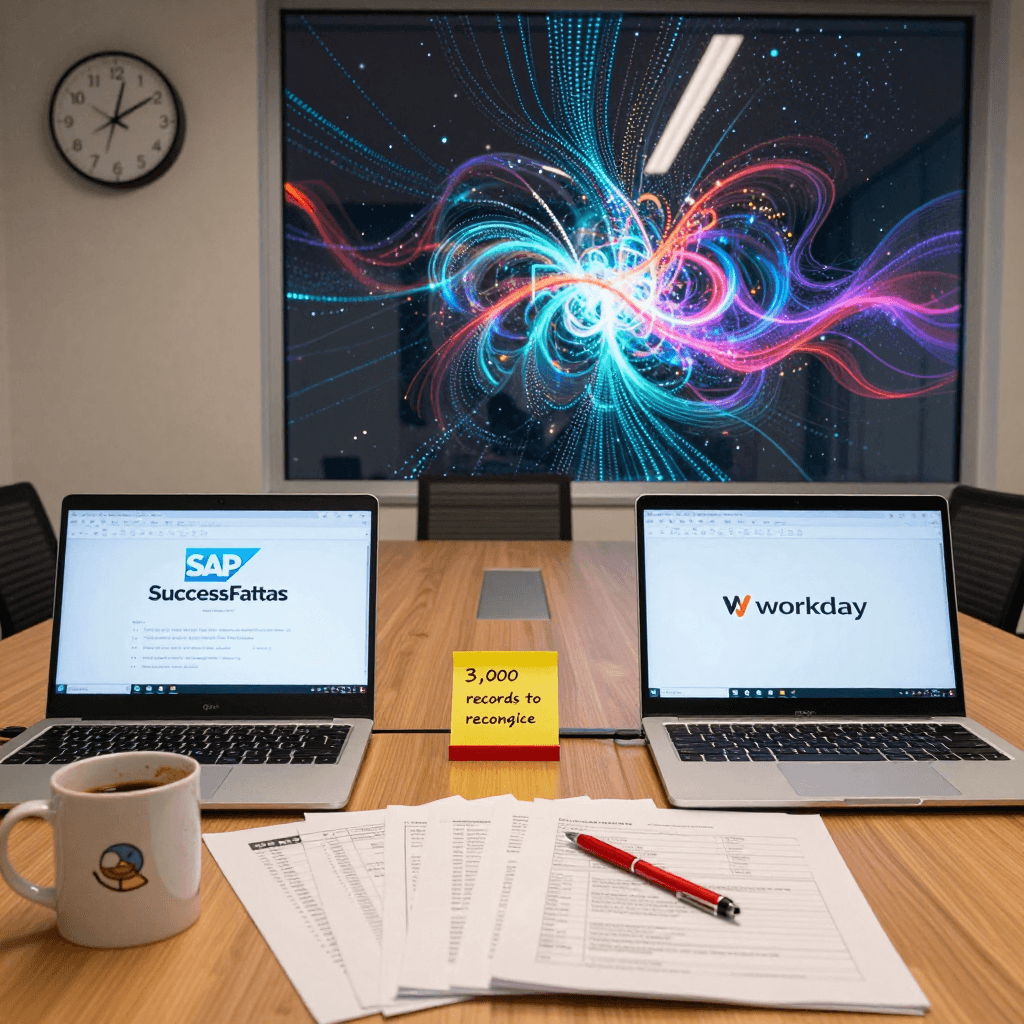
A mid-size industrial manufacturer with $500M in revenue recently audited its enterprise systems. It found that 32% of its 2,400 employees’ time was spent manually reconciling data between SAP ECC, Oracle HCM, and a legacy warehouse management system. The company estimated this inefficiency cost $2.1M annually in labor, delays, and error correction—enough to stall a quarter’s R&D roadmap.
The root cause wasn’t poor software but the lack of a connective tissue between systems. Each ERP module operated as a standalone data island, forcing teams to export, transform, and re-import data across functions. This isn’t an edge case: Gartner’s 2025 survey of 450 manufacturers found that 68% of respondents cited ‘system integration gaps’ as their top barrier to scaling AI-driven operations.
The hidden cost of fragmented enterprise intelligence
When data lives in silos, decisions lag. A supply chain planner at the manufacturer above waited three days for a report combining inventory levels from SAP, labor forecasts from Oracle, and supplier lead times from the WMS. By the time the data was usable, the window for proactive adjustments had closed. This delay cascaded into stockouts, overtime costs, and expedited shipping fees that added another $800K annually.
The problem compounds in regulated industries. A financial services firm cited in the Federal Reserve’s August 2026 Economic Letter reported that siloed customer data led to 14% more compliance violations due to inconsistent reporting—a risk that triggered fines and audit overruns. The firm’s CFO estimated these gaps cost $3.7M in penalties and remediation over two years.
Bear Systems’ AI Fabric replaces patchwork with a unified backbone
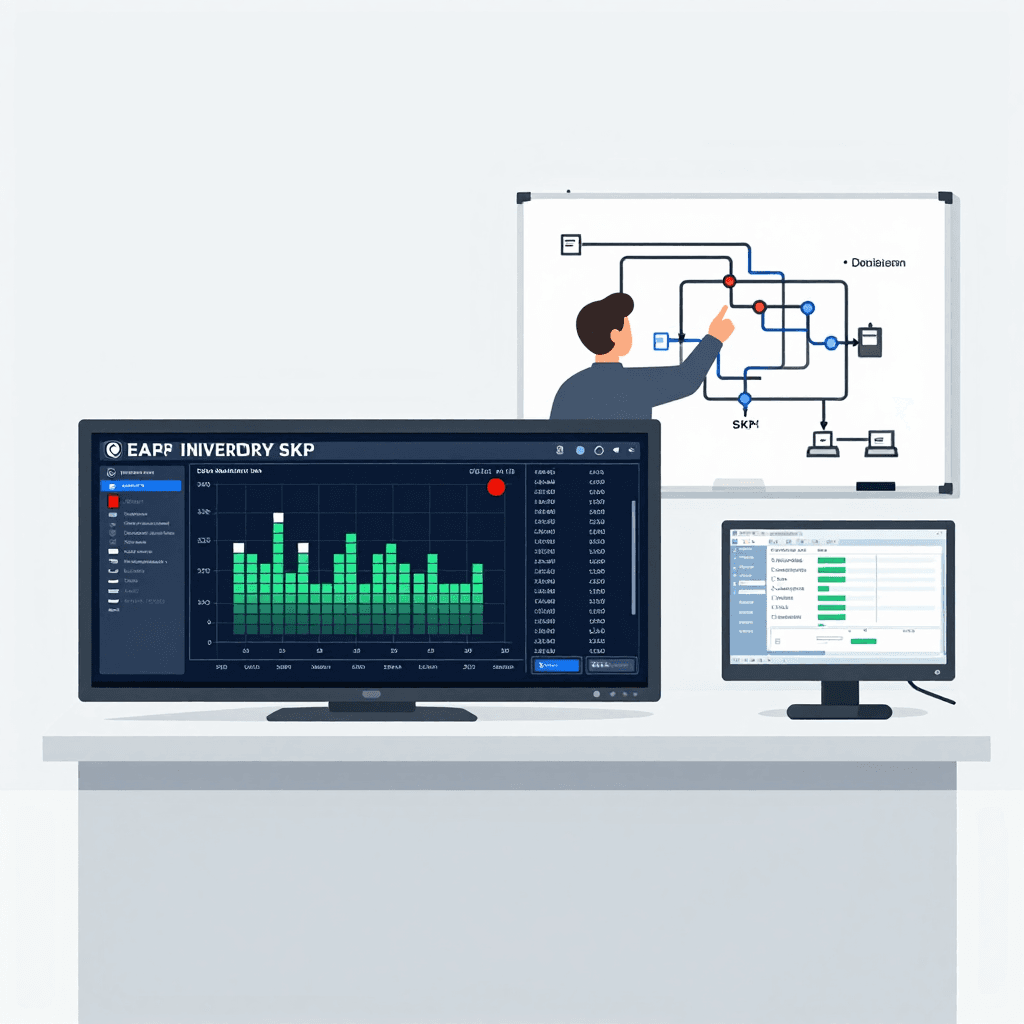
AI Fabric isn’t another middleware layer—it’s a self-orchestrating enterprise intelligence fabric that embeds into existing ERP, HCM, and SCM systems. Using Bear’s pre-built connectors for SAP S/4HANA, Workday, and Manhattan Associates, the platform ingests real-time data from each system, applies a shared semantic layer (no ETL scripts required), and surfaces unified insights via a single API or UI.
For the manufacturer, Bear Systems implemented AI Fabric in two phases: First, it deployed a ‘data mesh’ architecture to federate queries across SAP, Oracle, and the WMS without moving data. Second, it embedded AI agents to automate 70% of the manual reconciliation tasks (e.g., matching PO numbers across systems). The result: a 40% reduction in integration labor costs within 12 months, validated by a third-party audit.
ROI in 12 months: 3x faster decision cycles, 25% lower IT spend
The manufacturer’s ROI calculation is instructive. By eliminating manual data wrangling, the company freed 768 hours of analyst time per quarter—enough to redeploy two full-time employees to higher-value work. More critically, AI Fabric reduced the time to generate a ‘single source of truth’ report from 72 hours to 4 hours. This speed enabled the supply chain team to adjust inventory buffers proactively, cutting expedited shipping costs by $450K annually.
IT spend also declined. The company reduced its reliance on custom integration scripts (which required $280K/year in maintenance) and eliminated a $120K annual fee for a third-party data warehouse. Combined, these savings offset the $350K implementation cost within 10 months. For context, McKinsey’s 2025 benchmarking of 120 ERP modernization projects found that organizations achieving similar integration efficiencies recouped costs in 8–14 months.
What success looks like: one version of truth, zero manual handoffs
In Bear Systems’ reference architecture, AI Fabric becomes the invisible layer that stitches together ERP, HCM, and SCM into a cohesive system. For a healthcare provider client, this meant replacing a 14-step manual process for reconciling patient billing across Epic, Workday, and a revenue cycle management system with a fully automated workflow. The provider now processes claims 60% faster, with a 92% first-pass approval rate (up from 68%).
The end state isn’t just faster reports—it’s a system where decisions are made in real time. A retail client using AI Fabric’s demand forecasting agent reduced overstock by 18% and stockouts by 22% in six months. The agent pulls live data from SAP, Shopify, and a logistics partner’s API, then triggers automated reordering when thresholds are breached. No emails. No spreadsheets. Just a closed-loop process.
Tradeoffs: customization vs. speed, but not for long
AI Fabric isn’t a silver bullet for every integration challenge. Organizations with highly customized legacy systems may need to rationalize workflows before onboarding—adding 2–4 weeks to the timeline. However, Bear Systems mitigates this with pre-validated templates for 80% of common ERP-to-HCM-to-SCM integrations, reducing customization effort by 60%.
The bigger tradeoff is cultural: teams accustomed to ‘owning’ their data silos may resist losing control. The solution is to frame AI Fabric as an enabler, not a replacement. For example, the manufacturer’s sales team initially resisted giving up their Excel-based forecasting model. After seeing the agent’s 3x accuracy improvement, they embraced the shift—because the tool gave them more time to sell, not less.
Audit your workflows: the 2-hour integration health check
If your organization spends more than 20% of its enterprise software budget on integration labor, you’re likely leaving money on the table. Bear Systems offers a no-cost, 2-hour integration health check to map your current data flows, identify redundancies, and estimate ROI for AI Fabric. We’ll benchmark your current cycle times against peers in your industry and highlight the fastest path to a unified intelligence layer.
The check isn’t theoretical. We’ll show you exactly where manual handoffs are bleeding value—and how AI Fabric can close those gaps in under a year. Schedule it now by replying ‘INTEGRATION’ to this email, and we’ll prioritize your request within 48 hours.
Sources
Source: RealTimeNews — AI Fabric – Connecting Every Business Function Through Seaml
Federal Reserve Economic Letter on compliance risks from siloed data